A Trapezoid for My Mother
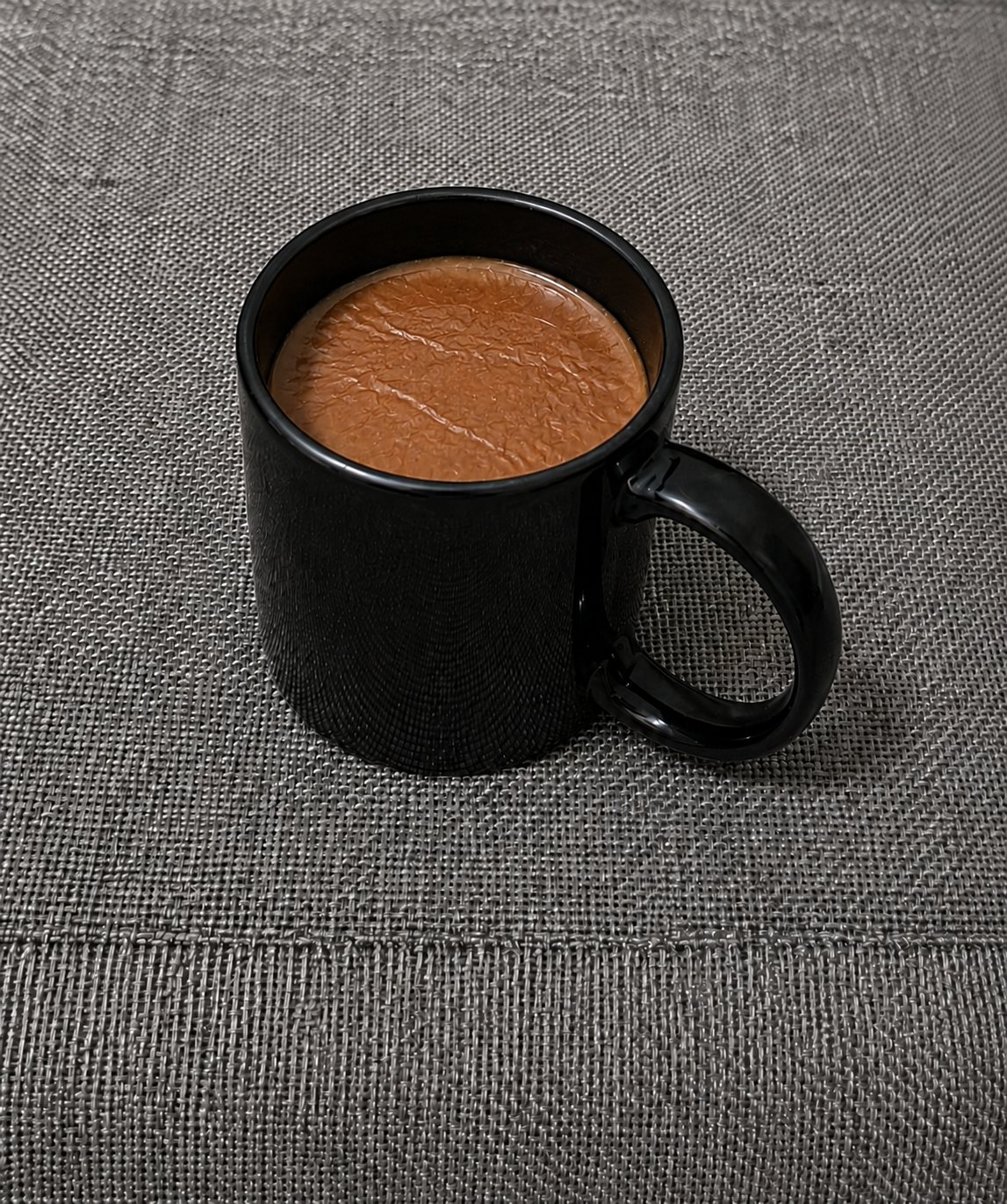
The tea had grown that thin brown skin on top, the sort of skin tea gets in Bengal when milk, heat, neglect, and municipal philosophy hold a small meeting in a cup. I sat there looking at it and wondering which version of the truth to write: the real one, with its cracked plaster and smell of damp cloth, or the mother-approved version, where everything is still roughly rectangular if viewed from a kind angle.
I soften things for my mother.
That is the first dishonesty. It may also be the last decency.
A trapezoid becomes a rectangle. A broken railing becomes “a little loose.” A mind full of old smoke becomes “not feeling great.” Depression becomes “mood is low.” Panic becomes “sleep was poor.” Collapse becomes “trying.”
This, I suspect, is how civilization began. Not with fire, not with agriculture, not with some hairy genius inventing the wheel while mosquitoes applauded, but with one frightened human saying to an old mother, “No, no, everything is fine. You eat.”
The geometry still annoys me.
A rectangle is a respectable shape. Four right angles. Opposite sides parallel. Neat. Predictable. It looks like it has a savings account and keeps receipts in a plastic folder. A trapezoid is already negotiating with failure. One pair of sides remains disciplined; the other pair wanders away like two uncles after a wedding lunch, one toward the sweet counter, the other toward argument.
A trapezoid is not ruined.
That is the problem.
It is close enough to pretend.
It has the look of something that once knew order and has since made private arrangements with gravity. A little bent. A little slanted. Still on paper. Still defensible if the examiner is kind or distracted.
For my mother, I am a rectangle.
A little dented for artistic reasons.
Depression, meanwhile, has become a word people use as casually as they use “traffic” or “gastric.” The word has been polished by office wellness posters, lifestyle magazines, and people on the internet who can turn a late food delivery into a generational wound. Real depression is not sadness with better lighting. It is not a rain scene. It is not a thoughtful person looking out of a window while a piano behaves itself in the background.
Real depression removes interest.
That is the cleanest way I can say it.
It does not merely make you unhappy. Unhappiness still has shape. You are unhappy about something: a person, a bill, a tooth, a betrayal, a blood test, a missed train, a life that has become too small for the size of your original arrogance. Depression is more cunning. It walks into the room and takes the “about” away. Then everything sits there without handle, label, flavor, or invitation.
Tea becomes wet brown habit.
Food becomes chewing.
Morning becomes evidence.
The old doctors tried to name this creature. Melancholia. Black bile. Ancient Greek medicine had a wonderful confidence for people who were mostly guessing under poor lighting. Then came other ages, other theories, other cabinets of classification. Brain chemistry. Stress. Sleep. Memory. Hormones. Inflammation. Networks. Circuits. Receptors. All useful. All necessary. All still unable to fully explain the private absurdity of waking up in a small room and feeling as if someone has replaced your future with yesterday’s damp newspaper.
Science helps me because it does not flatter pain.
It does not say the universe has a plan. A planned universe would be a much larger insult. Science says, more modestly and more honestly: here are mechanisms, here are limits, here is what we think, here is what we do not know, here is where the map tears, here is where the instrument shakes in the hand.
Good.
I prefer a cold truth to a warm fraud.
But no explanation, however elegant, can become the experience. Language can point. It cannot suffer on your behalf. A sentence about toothache cannot make your jaw throb. A description of hunger cannot fill the stomach. A paragraph about panic cannot recreate that private inner stampede when the body behaves as if a tiger has entered the room, though the only visible enemy is a plastic chair, a phone, and one unpaid bill lying face-down like a defeated cockroach.
So when I return to depression again and again, some cheerful reader with a morning routine and good shoes may wonder: why this subject again?
Because it returns first.
It does not wait outside politely. It has no manners. It enters before tea, before brushing, before the day has even put on its shirt. It sits at the edge of the bed and begins its roll call.
Age.
Teeth.
Money.
Work.
Mother.
Mother’s health.
Mother’s eventual absence.
Your own uselessness after that.
It is a rude clerk with an endless file.
And then introspection begins, that great Bengali indoor sport. Cheaper than tennis, more dangerous than fried snacks.
People praise introspection because they imagine some calm philosopher under a tree, stroking his beard and locating truth. They do not imagine a middle-aged man in a rented room, thighs sticking to a plastic chair, interrogating himself like a police inspector who has missed lunch. Depressive introspection is not wisdom. It is sewer fishing. You lower the hook and up come old slippers, plastic packets, school humiliations, romantic embarrassments, professional mistakes, family sentences, unpaid hopes, and one or two ancient compliments now floating like dead flowers after immersion.
The well has not exactly run dry.
A dry well would have dignity.
This one has a little sour moisture left at the bottom, enough to breed mosquitoes of thought. The bucket goes down and returns with fragments. A bit of ambition. A broken joke. Some old pride. A receipt from a version of myself who believed life still had a counter where things could be exchanged.
And because my mother may read, I do not show her the bucket.
I rinse the sentence.
I comb the corpse.
I say, “I am tired.”
Is that love? Is it cowardice wearing a shawl? In Bengali families the two often sit very close, like rice and potato on a plate, absorbing each other until nobody can tell which one was supposed to be the main item.
A mother reads differently from the public.
The public reads for entertainment, agreement, judgment, gossip, or the small pleasure of feeling better arranged than the writer. A mother reads with her body. A line does not remain a line. It becomes blood pressure. It becomes lost sleep. It becomes a hand resting too long on the edge of a table after lunch.
So I pad the corners.
I report the earthquake as “some shaking.”
I describe the storm as “weather.”
This is the strange business: being honest in public and dishonest for mercy.
And what does the public want from honesty anyway? Usually not the raw material. Raw material is inconvenient. It smells. It stains. People prefer the edited wound, the tidy scar, the suffering that arrives with a lesson and leaves before dinner. They like the man climbing out of the pit. They are less fond of the man sitting inside it, noticing the damp wall, the biscuit wrapper, the dead mosquito, and the depressing fact that the ladder was probably never installed.
Sometimes there is no ladder.
Sometimes there is only inventory.
This crack above the window. That stain near the switchboard. The fan making a tired chopping sound in the heat. The cup cooling on the table. The phone silent except for promotional messages offering loans to a man who should not be trusted with hope, let alone credit.
Observation is not cure.
But it is a refusal to vanish completely.
A man may be reduced, but he can still notice the exact color of the wall that is reducing him. That is not much. Some days it is all.
Outside, ordinary Calcutta continues its sweaty opera. Someone quarrels about parking. Someone sells green chilies from a basket. A child in a school uniform drags one shoe as if education itself has become heavy. Somewhere a pressure cooker whistles with the authority of a minor dictator. The city does not pause because one man’s mind has become a badly managed storage room. Cities are rude that way. They keep moving. They have drains to choke, cables to sag, tea to boil, and politicians to mispronounce concern.
In such a place, “Don’t worry” is not a sentence.
It is household engineering.
“Don’t worry” means worry, but quietly.
“Don’t worry” means I have hidden the worst paragraph.
“Don’t worry” means I am holding back the flood with a bathroom mug.
“Don’t worry” means the trapezoid is still passing as a rectangle in low light.
Tonight, perhaps, I will write again. Or not write. Or sit with the tea gone cold while the room gathers its usual evidence against me. Somewhere my mother may be sleeping, or half-sleeping, or lying awake with the old maternal radar still foolishly switched on.
So I will keep one more sentence from becoming a knife in her room.
The well smells. The bucket is suspicious. The geometry is fraudulent.
But the rectangle is ready for inspection.